Renting Near Toronto's Financial District, For the People Who Work In It
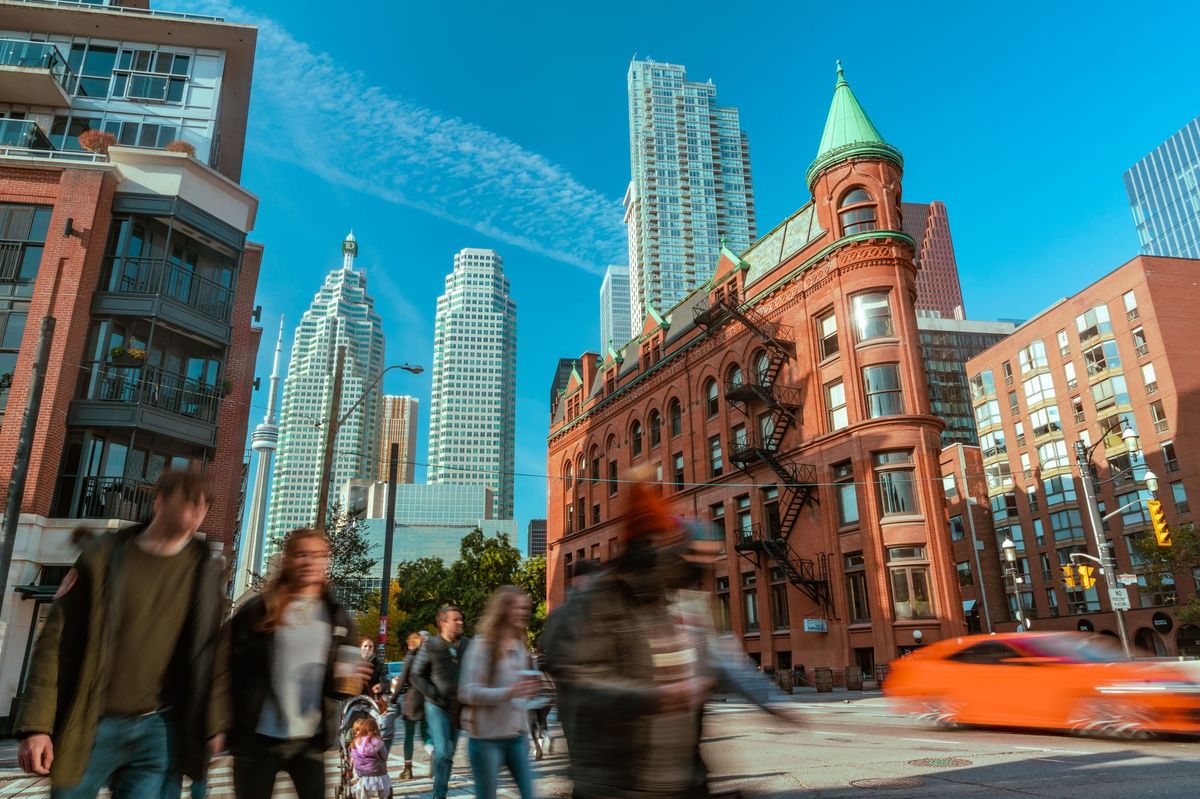
The short walk to Bay Street.
At 6:15 on a Tuesday evening, the exits of First Canadian Place empty out in two directions. One stream heads down into the PATH, Toronto's underground pedestrian network, toward Union Station, GO trains and a commute that will eat another forty-five minutes to an hour before dinner. The other stream crosses the street, or two, and is home.
That second commute is the subject of this story.
The Case for Living Close
Toronto's Financial District — the cluster of towers around King and Bay, anchored by Union Station to the south and Queen Street to the north — employs roughly a quarter-million people on a given workday. Very few of them live inside it; the district itself is mostly office floors, retail concourses and the PATH. But a growing number of financial district workers have started looking at the neighbourhoods just outside its edges: St. Lawrence Market to the east, King West and King-Spadina to the west, and the Fashion District and CityPlace beyond that.
The appeal isn't complicated, even if it's rarely stated plainly. A five- or fifteen-minute walk to work returns something that a fifty-minute GO ride does not: time. Not gym-membership time or productivity-app time, but ordinary time — a slower morning coffee, a lunch hour that's actually an hour, a workout before the office instead of after it, dinner with people instead of a transit app.
There's also a quieter benefit that shelter and design writers talk about less often than commute minutes: the psychological line between office and home gets easier to hold when the two aren't fused by an hour of shared transit stress. Walking home, even for ten minutes, does something a train delay doesn't — it gives the day an ending.
None of this is a promise that proximity fixes everything. Rents close to the core run higher than in most of the city, and buildings marketed on "steps to the Financial District" don't always deliver on quiet, light or genuine neighbourhood life. But for people whose working hours are already long and whose calendars aren't their own, buying back the commute is a real trade, not a marketing line.
What "Close" Actually Looks Like
"Close to the Financial District" doesn't mean living inside it — there's very little residential stock within the district itself. It means one of a handful of surrounding neighbourhoods, each reachable on foot in well under half an hour, several in well under ten minutes.
St. Lawrence Market, east of Yonge along Front Street, is the closest genuine residential neighbourhood to the financial core — heritage brick, the market itself, Berczy Park and its dog fountain, and a five-to-ten-minute walk to King and Bay.
King West and King-Spadina, west of University Avenue, sit directly against the district's western edge, connected by the King streetcar and a short walk to St. Andrew subway station. It's the city's busiest transit corridor for a reason.
The Fashion District and CityPlace, further west near Front and Bathurst, trade a slightly longer walk — fifteen to twenty-five minutes — for more residential density, a direct line to Union Station's GO and UP Express platforms, and easy access to the Gardiner for anyone occasionally driving in.
All three are close to the district's PATH, the 30-kilometre network of underground walkways linking most of the core's towers to shops, subway stations and, increasingly, residential lobbies. On a January morning, that matters more than most renters expect.
A Few Options Worth Knowing
These aren't the only buildings within reach of the core, and Apartment Culture will look at more of them, including the city's newer purpose-built rental communities, in future coverage. But they're a reasonable starting point for anyone mapping out a shorter commute.
The Berczy — 55 Front Street East, St. Lawrence Market. Completed in 2013 across from Berczy Park and the Gooderham Flatiron Building, this mid-rise mixes traditional red brick with a contemporary glass addition. It's a ten-minute walk to King and Bay, with the market, the Esplanade's restaurant strip and Union Station all closer than that. Amenities include a fitness centre, party room and rooftop deck; the building is condo-owned, so available units come through individual owners rather than a single leasing office, and inventory shifts month to month.
Sixty Colborne — King and Church. Designed by Toronto architect Peter Clewes and completed in 2017, this tower sits close enough to the district that residents can reasonably walk to a desk on Bay Street in well under ten minutes. Like the Berczy, it's condo-owned rather than purpose-built rental, which means renting here means going through an individual owner or agent — worth knowing before you fall for a listing photo.
Minto Westside — 576 Front Street West and 27 Bathurst Street, Fashion District. Two towers of 18 and 20 storeys near the western edge of downtown, with a rooftop pool, fitness centre and courtyard, and a short walk to King Street's restaurant row and Union Station's rail platforms. It's a slightly longer walk to the heart of the Financial District — closer to twenty minutes — but a genuinely shorter one to the GO and UP Express, which matters for anyone splitting a commute between the core and elsewhere in the region.
Worth noting for context: none of the three is a dedicated purpose-built rental building — all are condominium towers where individual owners lease out suites, which means availability, pricing and lease terms vary by unit rather than by a single building policy. Toronto's purpose-built rental pipeline is expanding quickly — the city saw a record number of new rental units completed in 2025 — and more of that supply is beginning to reach the neighbourhoods ringing the Financial District. Apartment Culture will follow that pipeline as it lands closer to the core.
The Trade Worth Making
No apartment near Bay Street will be the cheapest option in the city, and nobody should mistake a short commute for a finished life. But for the people who spend their working hours in those towers, the calculation is a fair one: less time underground, more of it at home — however many minutes that home happens to be from the desk.